
Arts in Education: Why We Care
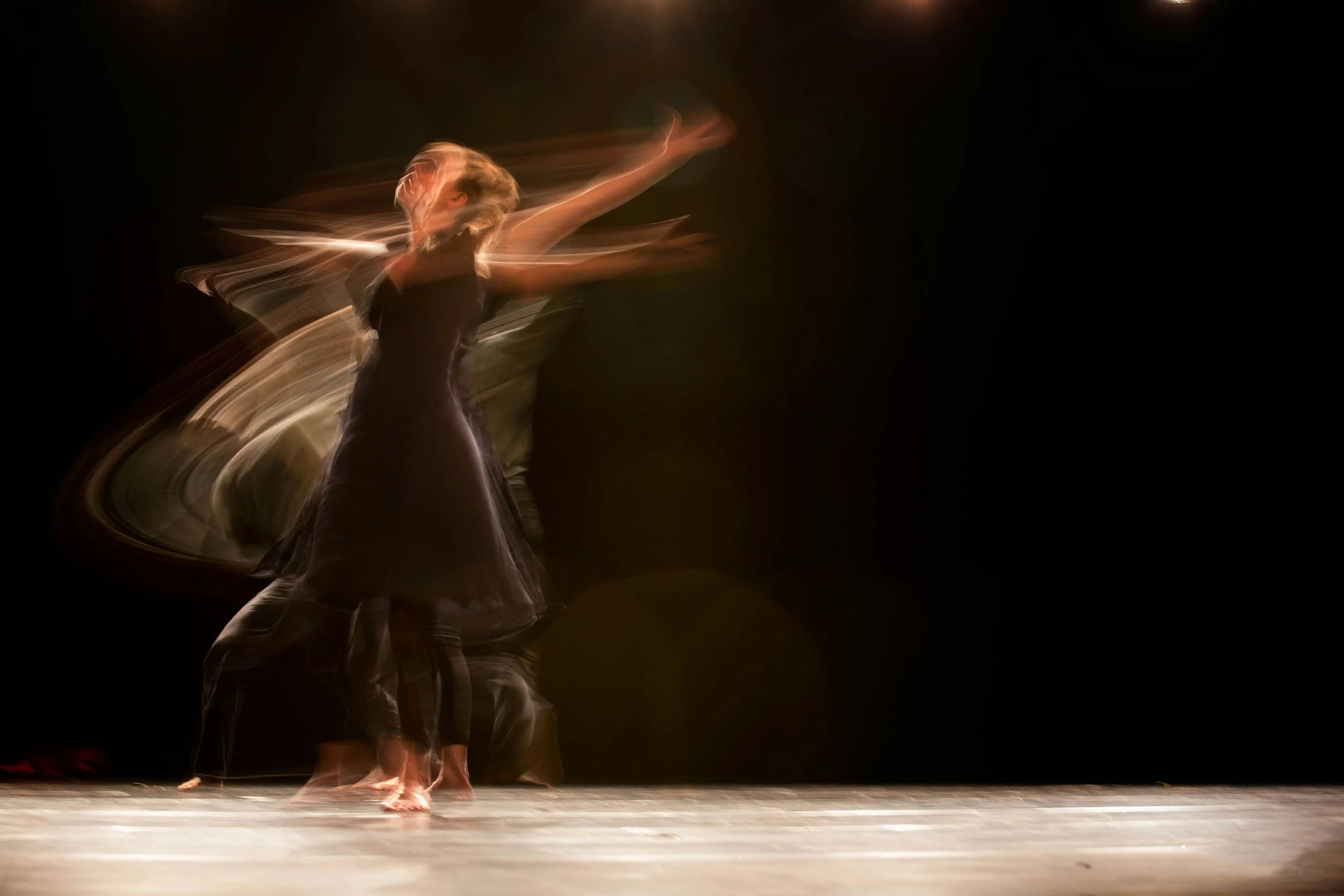
Photo by Ahmad Odeh on Unsplash of dancer in dark dress with long exposure time.
Each of us has a story to tell. Our stories are both unique and universal. The arts education field is expansive in our perspectives and beliefs. We come from diverse backgrounds with wide-ranging artistic interests and areas of expertise. That said, there is a connective tissue that binds us across disciplines, which is both useful in finding common ground but also limiting in broader policy debates. Reaching beyond those limitations is essential to our ability to advocate collectively for change.
Inspiring Role Models
In an informal query about motivation to enter in the arts education field, I asked, “Who was the role model that inspired your engagement in the field?” Hands down, the most common response describes a teacher-- whether a parent, elementary teacher, or graduate school adviser-- as a model and guide.
One recurring theme in respondents’ comments is possibility. Role models help us imagine future paths and create the space to learn and explore. A related theme is the discovery that our voices matter—and that we can and should use them. (See Postscript at the end of the article for excerpted quotes.)
Individual to Collective
Most of us have a defining experience that shaped our passion for the arts and arts education, whether it is through the inspiration of a mentor or an “ah-ha” artistic moment. The experience is central to our “why.” This personal motivation is also at the heart of our advocacy efforts. Advocacy is always personal. We advocate every day, both formally and informally— advancing causes for ourselves and others at work, for our children at school, and for people in our communities.
The question then becomes how to harness that motivational source in the service of larger collective goals.
Dancing in the Margins
Our field has banded together for some notable legislative and budgetary successes. Significant among those is the inclusion of arts and music as part of a well-rounded education in the 2015 Every Student Succeeds Act (ESSA). However, we often find ourselves on the sidelines in broad discussions about education.
In a recent questionnaire of gubernatorial candidates in Colorado hosted by Colorado Business Committee for the Arts, respondents carefully skirt the question about policies they would prioritize to strengthen student outcomes and creative learning in K-12 public schools, including access to arts education. Candidates seem to affirm they are in favor of arts education as part of a well-rounded education but cannot say how they would strengthen it or create better access. In other words, no one came out swinging for arts education.
Vague responses aren’t surprising in the political arena. Candidates hope to appeal to voters without making commitments outside their main talking points. However, it’s instructive to expand the lens to look at what the public is saying..
In a public opinion poll conducted by Americans for the Arts in 2023, results showed: “Nine-in-10 American adults believe that it is important for students to receive an education in the arts (including dance, media arts, music, theater, visual arts, and literature). Seventy percent of American adults agree that ‘The arts help students perform better academically,’ with one-third strongly agreeing with this statement.”
In a statewide referendum on funding for arts education, California's Proposition 28 (Arts and Music in Schools) was approved by voters in November 2022. It guarantees ongoing annual funding for arts and music education in public and charter schools (grades TK–12), estimated to be between $800 million and $1 billion. What’s interesting (amazing, really) is that 6.9 million voters (64.4%) voted YES. (3.8 million voters or 35.6% voted against.) Almost 7 million people said, “Yes, we think the arts are a worthy educational investment!”
To turn that public enthusiasm into action, we (parents, educators, artists, nonprofit and community leaders) can apply the lessons of our role models: confidence, openness, and a sense of possibility.
Yes, And…
Flip the switch on negative language. Be creative in finding ways to be included in the conversation. Remember, innovation and creativity are our superpowers. “My principal says the arts are important, BUT the budget won’t allow for more teachers, equipment, or classes.” Try replacing “but” with “and”: “My administrator says the arts are important, AND I’ve offered to work with other teachers to identify practical solutions to our equity challenges.” Advocacy is more effective when we are part of the solution.
Trust Others
In times of scarcity, human instinct is to protect ourselves—our livelihood, programs, and status. In the arts education field, such self-protection can lead to division and distrust. Silos often separate arts disciplines. And the arts are often held apart from other subject areas and larger education conversations, which is ironic since the power of the arts cuts across disciplines. To promote understanding across siloes, try serving on school councils, partnering with colleagues in other disciplines and sectors, joining the conversation in education forums not focused on the arts.
Both/And
Arts education is not one thing. It is both a dedication to the skill and technique of making art, and it is also about the fundamental human desire to create. We share the capacity for creativity across disciplines (dance, music, theatre, visual arts, media arts) and among sectors (education, health, business, etc.). By narrowing our vision to one single aspect of what arts education is and should look like, we fail to realize the potential of our collective. BOTH content standards and equity of access during the school day AND out of school time programs, teaching artists, and community partners. When we are open to larger possibilities, more becomes possible.
Think of change as a tree—it doesn’t grow from the top down, so we shouldn’t be waiting for somebody to tell us what do to. It grows from the bottom up, and we are the roots of change.
~Gloria Steinem, Activist
Postscript
“Who was the role model that inspired engagement in arts in education?”
My costume design teacher in college. She challenged me to use all parts of my brain and to embrace messy. ~Higher ed leader
[My dad’s] … former students would recognize him and come up and thank him for what he taught them: how to see all the colors in the sky, to notice light play at different times of day and different times of year, to look at their world as artists. ~Visual art consultant
My practicum professor in college… poured into us and expected the same. His standards were exacting and many people didn’t love it, but I did. We disagreed about a lot of things, and he made me feel valued and important. ~Arts nonprofit executive
I LIVED FOR MUSIC CLASS! [My elementary music teacher] is now in her 80s…. I stand on her shoulders every single day when I step into my music classroom. ~Elementary music teacher
My parents would take us to a variety of arts venues…. They were the first individuals to describe these complex spaces to me as a blind member of the arts community and provided me that initial spark to push forward within my arts journey. ~ Museum educator