
Staggered Breathing: Managing Setbacks in Arts Ed
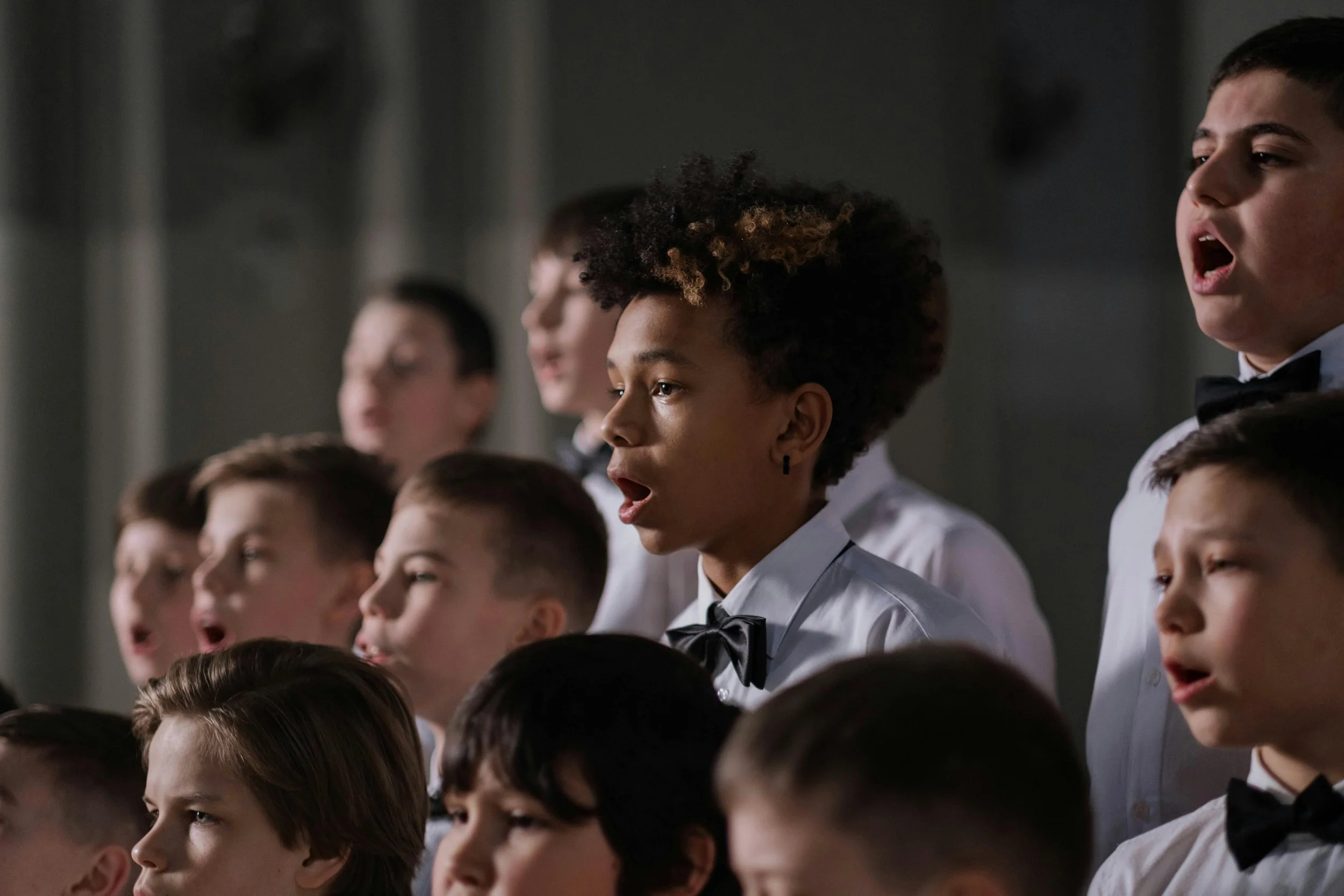
Youth choir photo by Cottonbro on Pexels
Arts education advocates are a relentless lot. Perhaps we are relentless because we believe in the arts. Perhaps engaging in the arts writ large leads to being relentless. Either way, our advocacy history has all the features of a compelling telenovela: rising and falling action, dramatic tension, storylines and plot twists, charismatic protagonists and evil overlords, comedic and tragic characters, surprising allies, and hard-fought resolutions.
However, we don’t always get a Hollywood ending or a final G chord that implies a safe landing and a feeling of resolution. A previous article on everyday advocacy focuses on celebrating the wins—large and small. This article is an exploration of how to manage setbacks. A setback is typically a negative external (or sometimes internal) force that inhibits our goals. It might be a changed policy for field trips that impacts students, a class schedule change that inhibits arts access, an imposed policy reducing graduation requirements, new leadership that doesn’t “get it,” shifting priorities, budgetary threats, or a myriad of others.
At the local level, each setback requires its own solution. No cookie cutter fixes here. Each issue must be considered in context, with unique local, demographic, geographic, and political forces at play. There are, however, several generalized practices that might help. This article is focused on changemaking at the local level and augments the fine work that is happening at state and national levels.
[Author’s note: Public education (including the arts) is fraught with warning signs at this moment. Uncertainty is certain. As are shrinking enrollments, teacher shortages, and severe pressures on state budgets. In short, a cascade of threats. National advocacy efforts, led by professional arts educator associations, national advocacy nonprofits, and corporate allies are doing the heavy lifting at the federal level, with guidance for federal and state action. Follow their lead, educate yourself on the issues, and get involved.]
Use Staggered Breathing
Sometimes, it's necessary to pause and let others help when we're tired or stuck. Staggered breathing, used by vocal and wind sections for sustained notes, lets musicians breathe in turns so the music flows without breaks. Applying the metaphor to advocacy means stepping back to take a breath while others fill in, allowing time for renewal and reflection. It also encourages new perspectives. When you change perspectives and step on to the balcony from the dance floor, what do you notice? What patterns can you see from the shifting forms below? What new alliances are emerging? Is the message clear? What can you learn from others? Are actions aligned with goals? Take a breath and come back with resolve when you’re ready.
Create a Kitchen Cabinet
Lasting advocacy efforts require teamwork rather than individual effort alone. I’ve long advocated for coalition building as an effective advocacy tool. That said, having a small cohort of allies within that big tent of like-minded stakeholders is useful for several reasons. A kitchen cabinet refers to an informal or unofficial group of advisors with diverse perspectives. For arts ed advocates, it might include allies in government, school administration, nonprofits, parents, or corporate friends. Many years ago, when my former organization was tapped to lead a campaign with a larger scope than we had capacity, it proved essential to include key leaders in adjacent fields to help with strategy and implementation.
When utilized strategically, a kitchen cabinet: 1) provides an accountability mechanism for the project (formal or informal); 2) creates a think-tank for the exchange of ideas; 3) distributes the workload and creates capacity; 4) is nimble and flexible; and 5) allows for key members to take a breath when needed. (See section above.)
Mobilize for Action
I recently heard an advocate say, “Everything was going great, until suddenly it wasn’t.” In this case, it was the state legislature that moved to change a policy that would have negative impact on student access to the arts. Advocacy becomes more urgent when faced with an external threat to the status quo. Some considerations when forming or activating a coalition that is preparing for immediate action::
What is your strategic communications plan? (Who, what, when where, how, and why)
What is the threat? What are your goals?
Who are the primary decisionmakers?
Who are the supporters/opponents of the bill/policy/budget item?
Who are your key allies who can provide support and leverage?
What networks can you deploy if a grassroots response is needed?
What are the most effective tactics to deploy and when? (Direct contact by key influentials? Lobbying? Grassroots response? Media attention? Testimony? Research data?)
In a true crisis, consider the framework on crisis management provided by Spitfire Strategies. Keep in mind that a crisis management coalition of short duration is best served when trust has been established among stakeholders.
Prepare for a Long Game
Being prepared to meet a the moment is a long-term proposition. An immediate crisis is best handled when plans and infrastructure are in place. (Click HERE to read about forming a coalition.) Lasting arts ed coalitions serve to keep attention on arts learning, advance policy goals, build capacity and leadership, and prepare for mobilization. Strategies for preparing for the long game include:
Cultivating influencers (the elected and non-elected kind)
Cultivate decisionmakers and community changemakers by inviting (or honoring) them at arts events.
Get to know decisionmakers (school board, principals, city council, state and congressional representatives) through meet and greets, volunteering for campaigns, and speaking at school board meetings.
Offer to be a resource for information for your elected officials.
Be prepared with data and stories to support your cause.
Taking a leadership role
Serve on school district budget and school improvement committees.
Be knowledgeable about pending policy or structural changes that impact the arts.
Be at the table in conversations about consolidation (closing schools).
Be a state advocacy leader in your professional association.
Be active in important adjacent organizations such as the PTA.
Run for school board, city council, state legislator, congress. (Why not?)
Pivot and Be Resolved
Keep in mind that every advocacy call to action is iterative, as is the process of change itself. With every effort—successful or not-- we learn from repetition and continuous improvement through refinement and adjustments. Adaptability is key. As the 1936 Jerome Kern/Dorothy Field song goes, “Pick yourself up, dust yourself off, and start all over again.”
Contact me to sign up for a free 1-hour advocacy coaching consultation.